- Once Upon a Farm Newsletter
- Posts
- Once Upon a Farm - November Newsletter
Once Upon a Farm - November Newsletter

Sam Once Upon a Farm
November 20, 2025
🌱 The Backyard Farm Update

Welcome back to another month at Once Upon a Farm! November has arrived with that peculiar spring energy where everything seems to be happening at once. Things are growing like crazy here—I'm chasing my tail trying to keep the grass tamed and the garden edges somewhat civilized, though I'm learning to make peace with a certain amount of wildness.
The garlic is heading into the home stretch before harvest, and I'm excited to see what has grown this year. From an above-ground perspective, it looks massive, which always makes me hopeful about what's happening beneath the soil. There's something almost ritualistic about garlic for me—planting those cloves in the depths of winter felt like an act of faith, and now as we approach the longest day, I get to see what that faith has produced. Once the garlic is out, more tomatoes can move into the space. They're patiently growing-on in pots right now, waiting for their turn in the soil.
The chickens are keeping up a steady stream of both eggs and broody hens. The flock seems very settled at the moment—there's a calmness to them that tells me the social dynamics have found their equilibrium. They're less than amused about all the garden beds being locked up, of course. I can see them eyeing those protected spaces with clear opinions about my priorities, but that's the dance we do. They have their territories, I have mine, and the garden netting draws the boundary between us.
🤔 Pottering Ponders
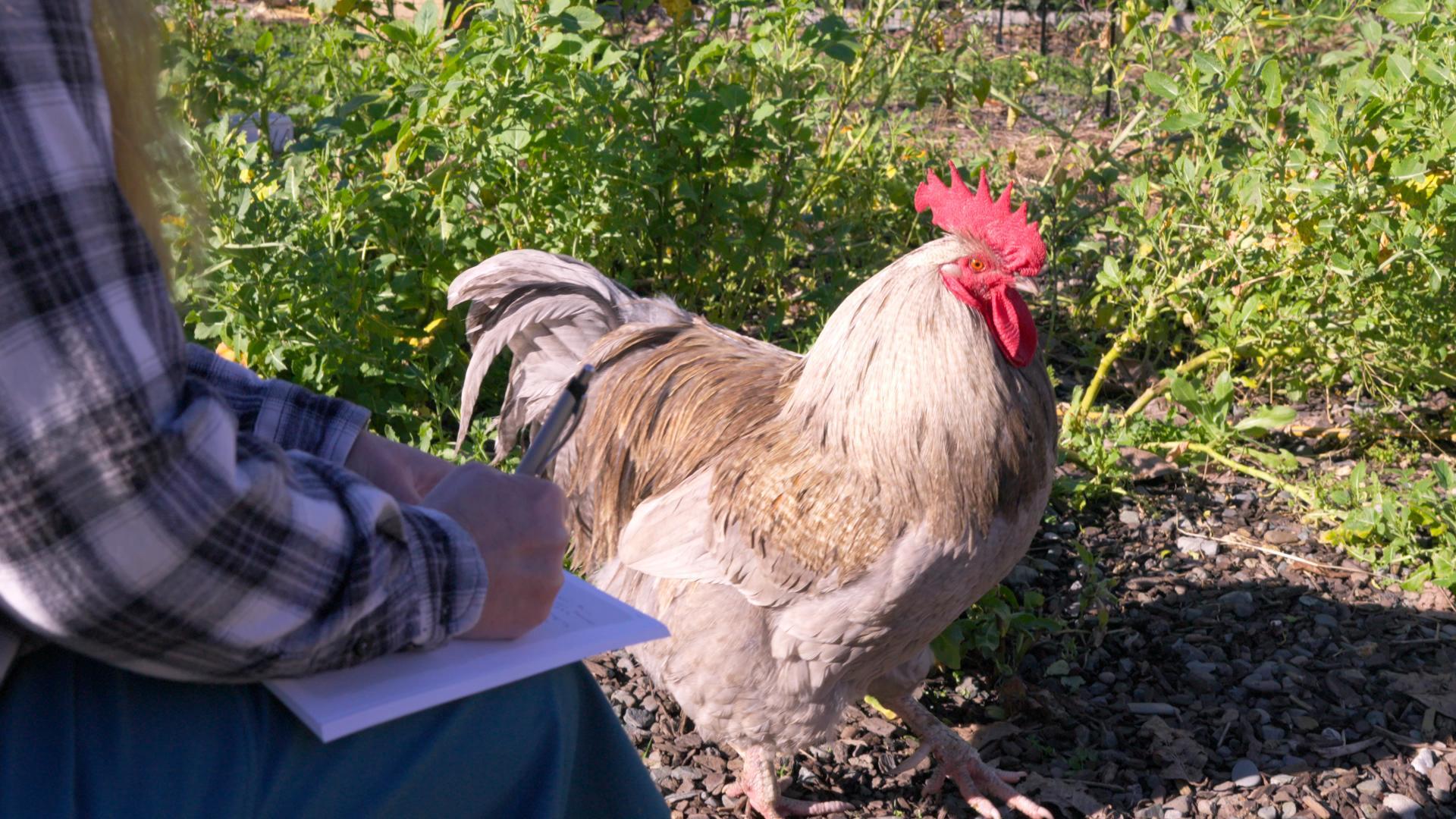
The Wisdom of Staying Put
I've been thinking a lot lately about how chickens teach us about the power of place. There's this fascinating thing they do—they fixate on locations, not on the things within those locations. Move a dust bath spot three feet to the left, and they'll ignore the perfectly good new setup and keep scratching away at the old spot, even though there's nothing there but memory.
At first, this seems stubborn, perhaps even a bit silly. But the more I live with chickens, the more I wonder if they understand something we've forgotten. In our modern world, we're encouraged to be flexible, adaptable, always ready to pivot. But chickens insist that some things matter precisely because of where they are—not what they are. The spot matters. The location holds meaning beyond function.
This shows up most clearly with broody hens. When a hen decides to go broody, she doesn't fall in love with eggs or even with the idea of motherhood. She falls in love with a place. She chooses a spot, and that spot becomes her world. Try to move her to a better nest box, a safer location, a more convenient setup, and she'll often refuse. It's not about the nest—it's about the place she chose. I've learned that if I want a broody hen to successfully hatch chicks in a location I prefer, I need to work with this location fixation, not against it. I create the right conditions in a new spot and then bring her there before she's fully committed to the wrong place. Sometimes it works. Sometimes it doesn't. The hen decides.
What strikes me about this behavior is how it mirrors something many of us are searching for—a sense of belonging that comes from deep commitment to a place. Not because that place is perfect or even particularly special by objective measures, but because it's ours. Because we chose it. Because we've invested ourselves there.
In a world that increasingly feels placeless—where we can video call anywhere, order anything, live almost anywhere—perhaps there's wisdom in the chicken's stubborn insistence that this particular spot, this specific patch of ground, matters profoundly. When I stand in my garden at the end of the day, watching my flock settle into their chosen roosting spots (many of them stubbornly in the trees rather than the perfectly good coop I provided), I'm reminded that belonging doesn't come from having the optimal setup. It comes from deciding that this place, with all its imperfections, is where we choose to be.
🌍 What's in Season?

What's In Season? - November 2025
Northern Hemisphere - Autumn/Fall
Planting:
Garlic cloves for next year's harvest (plant on or near the winter solstice if you're traditional like me!)
Cover crops like winter rye or crimson clover to protect and feed your soil
Cold-hardy greens under protection: spinach, mâche, winter lettuce
Spring bulbs for next year's pollinator support
Harvesting:
Last of the warm-season crops before frost—tomatoes, peppers, squash
Storage crops: winter squash, pumpkins, potatoes
Late-season greens: kale, chard, Brussels sprouts improve with cold weather
Root vegetables: carrots, beets, turnips (many taste sweeter after frost)
Recipe: Roasted Root Vegetable & Kale Bowl. Toss cubed beets, carrots, and turnips with olive oil and roast until caramelized. Serve over a bed of wilted kale with a poached egg from your flock and a drizzle of tahini dressing. The perfect autumn meal that celebrates both garden and coop.
Southern Hemisphere - Spring
Planting Now:
Summer crop seedlings if you haven't already: tomatoes, peppers, eggplant (make sure nighttime temperatures have warmed)
Direct sow: beans, corn, squash, cucumbers as soil warms
Successive sowings of salad greens for continuous harvest
Heat-loving herbs: basil, cilantro, dill
Harvesting:
Garlic! (If you planted on the winter solstice, it should be nearly ready)
Spring onions and early salad greens
Last of the cool-season crops: peas, broad beans, broccoli
Asparagus (if established—early spring treasure)
Strawberries starting their spring flush
Recipe: Fresh Garlic & Spring Greens Pasta. Pull your first garlic, slice thinly, and sauté in butter with a handful of spring greens (spinach, arugula, or pea shoots work beautifully). Toss with hot pasta, add grated cheese and a splash of pasta water. The sharp, fresh garlic juice on your fingers as you cook—that's spring right there. Warm bread optional but highly recommended.
🔬 Science Spotlight

The Biology of Broodiness
Since we're in broody hen season around here, I thought it would be fascinating to look at what's actually happening inside a hen's body when she decides to go broody. Understanding the biology helps us work with our flocks more effectively—and reminds us that these behaviors aren't random quirks but deeply rooted evolutionary strategies.
The Hormonal Cascade: Broodiness is triggered by a hormonal shift, primarily involving prolactin—the same hormone involved in milk production in mammals. When prolactin levels rise in a hen, several things happen: her body temperature increases (perfect for incubating eggs), her metabolism changes, her feeding behavior shifts, and most notably, her behavior transforms completely. A normally social hen becomes defensive. A hen who loved free-ranging now refuses to leave the nest. This isn't stubbornness—it's biology.
What's fascinating is that this hormonal shift is influenced by environmental cues: day length, temperature, the presence of eggs in the nest, and even the flock's social dynamics. This is why you'll often see multiple hens go broody around the same time—they're responding to similar environmental signals and potentially to each other's hormonal changes through pheromones.
Why Location Fixation Matters: The intense location fixation we see in broody hens makes perfect sense from an evolutionary perspective. In the wild, a hen needs to remember exactly where her nest is. She'll leave it only briefly each day to eat, drink, and defecate, then return. If she couldn't remember the precise location, she'd waste precious time searching, potentially allowing her eggs to cool too much or exposing them to predators. So evolution has given hens this powerful location-specific memory that kicks in once broodiness begins.
This is why trying to move a broody hen is often unsuccessful. It's not that she's being difficult—her brain is literally wired to return to that specific spot. Some hens can successfully be moved, particularly if they're moved very early in the broodiness cycle before the location fixation becomes fully established. But once a hen has been broody for several days, that spot is chemically locked into her brain.
The Cost of Broodiness: Going broody is metabolically expensive. That raised body temperature requires energy. The hen will typically lose body weight during the 21-day incubation period. She'll also stop laying eggs, of course, which from a flock production standpoint can feel frustrating—but from the hen's perspective, she's made a biological calculation. Better to invest energy in raising one successful clutch of chicks than to keep producing eggs that may or may not hatch.
This is also why breaking a broody hen requires removing her from her chosen location and often placing her in a well-lit, airy space. You're essentially interrupting the environmental cues that maintain those prolactin levels. It usually takes 3-5 days for the hormone levels to drop enough for her to return to normal behavior.
Working With Biology, Not Against It: Understanding that broodiness is a hormonal, location-specific process helps us make better decisions about our flocks. If you want a hen to hatch eggs, work with her biology: provide a safe, dark, quiet spot in a location where she's already showing interest. If you need to break a broody hen, understand that you're working against powerful hormones and instincts—it's not about willpower, it's about changing environmental cues.
For me, having multiple hens who like to go broody (thank you, Orpington genetics) means I've learned to see broodiness as a resource rather than a problem. Need a garden bed cleared? A broody hen in a tractor coop will scratch down weeds while thinking about motherhood. Want to hatch eggs? I've got willing mothers. It's all about working with what your flock naturally wants to do, rather than fighting against their biology.
Did You Know?
Chickens have an incredible ability to count and track individual eggs. Research has shown that broody hens can distinguish between their own eggs and others added to the nest, and they can even count up to at least five with remarkable accuracy. This is why broody hens will sometimes roll eggs out of the nest—they're managing their clutch size based on what they can successfully incubate. If you slip extra eggs under a broody hen, she may very well audit her collection and toss out the ones that don't feel like they belong. Never underestimate the mathematics of a determined broody hen!
📺 Last Month’s YouTube Spotlight
That's it for this month at Once Upon a Farm. As spring surges forward here and autumn settles in for those of you in the north, I hope your flocks are thriving, your gardens are growing, and you're finding moments to simply stand and observe the beautiful complexity of the systems you're tending.
- Sam